Lush Greens of Jewar near Noida-Greater Noida Expressway
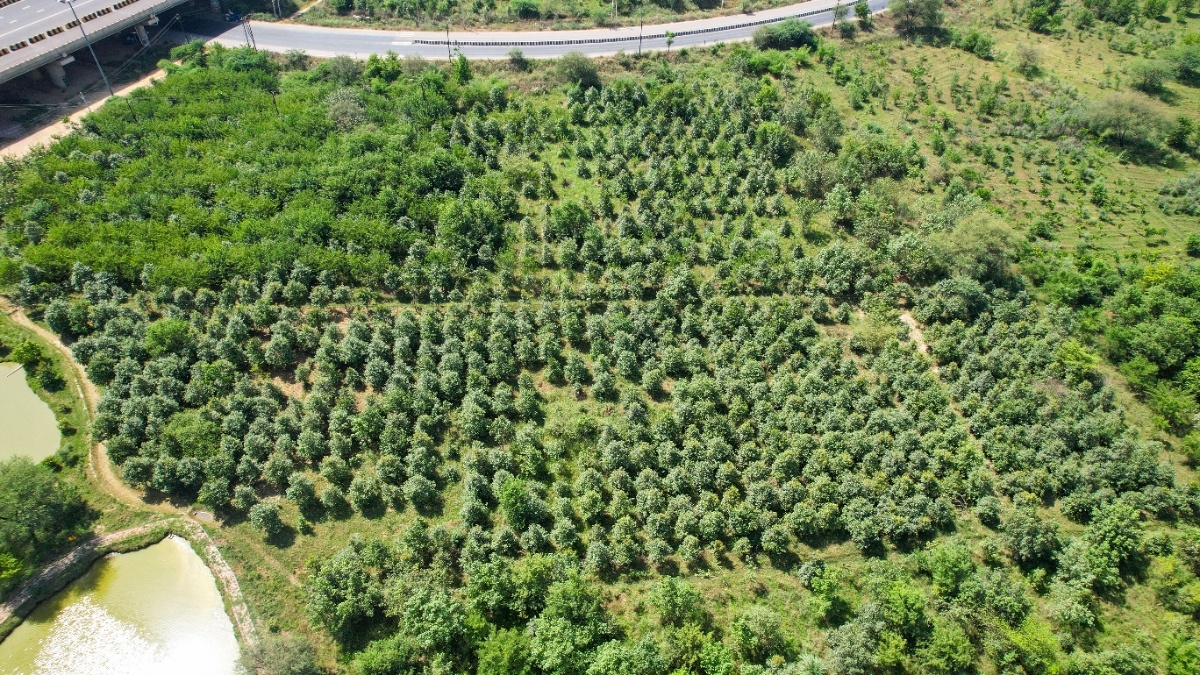
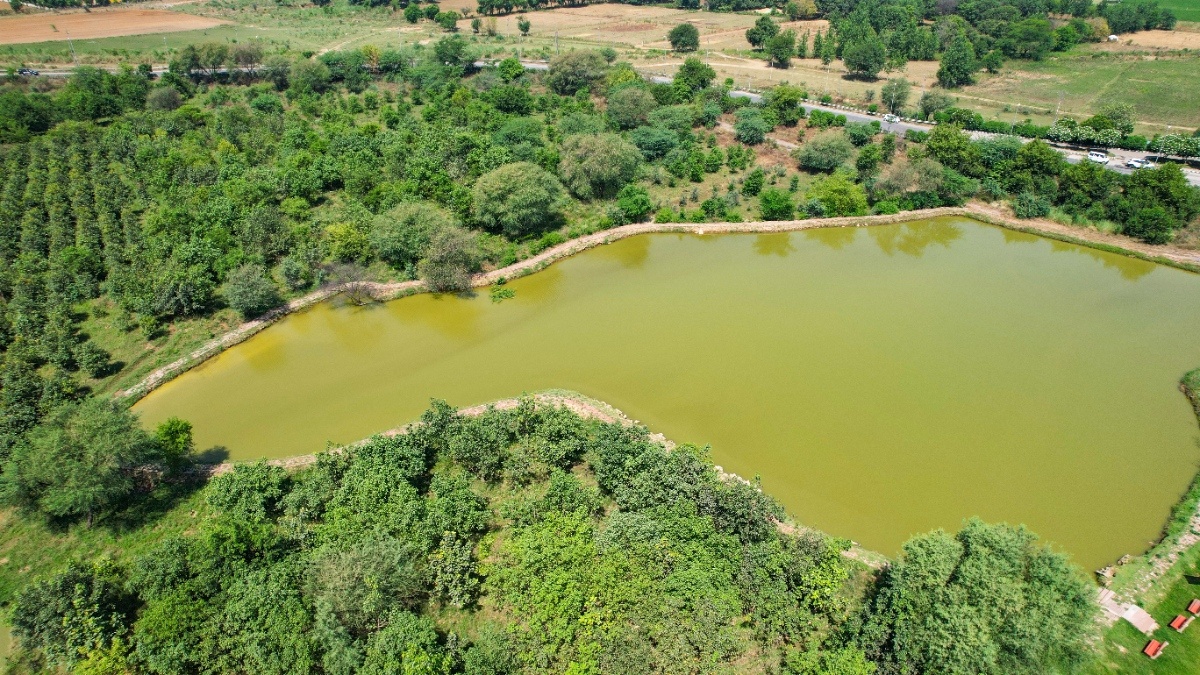
Manohar Van (beautiful forest) is identified as a unique experiment in afforestation and water conservation. As barren land taken on by the Haldiram Educational Society, the 100 acres has now been transformed into a lush forest. Located 36 kilometers from Greater Noida, it runs on both sides of the Noida Agra Expressway and is a nature’s paradise. The forest is lined with some of the rarest species of fruit and flower bearing plants and trees. Manmade lakes are a welcome spot for migratory birds, peacocks, and blue bucks.
Unnoticed and green, there is a man-made forest that stands quietly giving away fresh oxygen. A real paradise evolved on the sides of the Noida-Agra Expressway, since 2019, it is located 36kms from Greater Noida and runs on both sides of the Noida-Agra Expressway. Under the silent care and patronage of Shree Manoharlal Agarwal’s, (Group Chairman and MD, Haldiram Group of companies), it stands today as a humble contribution from a family of karma yogis.
Fondly called ‘Beautiful Forest’ Manohar Van, the lush forest is the effort of consistent work and dedicated effort of a group of individuals who have worked tirelessly to make it what it is today. In 2019 when the government decided to lease off 100 acres of barren land to private corporates, with the hope of its transformation. Back then, it could be compared to a desert. The Haldiram Educational Society humbly took over upon itself to take on the task of transforming this barrenness. Under the then leadership of B.N. Singh, as district magistrate of Noida, along with committed efforts of the local government and CSR Advisor and retired IPS Shree Pradeep Srivastava, the forest is now also a haven to exotic species of birds and some wild animals.
Over the years, planning and teamwork has led to its frolicking forest of greens, lakes and ponds. Using ingenuity, and simple but effective methods of plantation and irrigation, the land is planted with local as well as many rare species of plants. From the initial Gum Arabic trees (Babool) to around 65,000 plants planted, the place today also offers the joy of viewing and studying horticulture. It is a popular picnic spot for nearby schools too, including students of Gyanshree School, an educational institution run under the aegis of the Haldiram Educational Society. From leveling the uneven land, and finding ways to keep the area contained, to getting deep pits dug that were irrigated with natural manure, to masking them well to ensure moisture control, everything was managed inhouse and wholly funded by the Society. Funding has also supported erection of tubewells, plantation of exotic trees, their maintenance, setting up of drip-irrigation methods (hugely to prevent wastage of water and adequate moisture distribution for trees), fencing the premises to mark the geographical area, creating infrastructure for pit-digging for water body development (tractor-mounted pit-digging drills), to name a few other things. Bustling today, with massive trees running 15 feet in height, they offer natural pathways for nature walks. To ensure optimal growing conditions for the trees, a unique Japanese Miyawaki technology was adopted and resulted in a successful transportation of saplings from a nearby nursery in Alwar.
Under the aegis of the extending support staff, variety of trees to enjoy include those found it Indian villages and rural areas like the humble Neem, Peepal, Banyan, Fig, Pakar (or Pilkhan), Tamarind, Semal, Palash, Bael, Jackfruit, and Moringa, etc. The rarer variety includes Baheda, Mahua, Harad, Arjuna, Katha to name a few. There are then the fruit trees that attract birds and provide them food, such as Jamun, Mango, Mulberry, Fig, and gooseberry.Manohar Van does not make use of artificial fertilisers or any manmade efforts for pruning. This is to maintain its natural order, without disturbing its evolution as a forest. The blue buck, nearby bulls and migratory birds are welcome at any time of the year. Manmade water bodies are open to satiate their thirst, and the fruiting trees are yet to celebrate their first bounty. Another five years hence, and the forest would be ready as a case-study on how proper intervention, persistent work and simple conventional methods of irrigation and forestation can help reverse climate crises. Currently, the premises demand maintenance expenditure of Rs. 2-3 lakhs. There is also ongoing development of horticulture, security and upkeep that comes with its own manpower need and focussed work. This afforestation effort today is being seen as a successful example of how simple and consistent efforts can develop a man-made forest. It is a welcome sight near the newly inaugurated Jewar Airport too.